Wednesday, April 11, 2007

Here are a couple poems from “Making Waves” and “Making More Waves” two anthologies of writings published by the Asian Women United of California. Asian Women United of California is a nonprofit organization that was founded in 1976 to promote social, economic, and general welfare of Asian American women. These books are good examples of Asian American women finally starting to get their voice out to the public to be heard.

The first poem is by Brenda Paik Sunoo. She is a third-generation Korean American, a human rights advocate, lecturer, and journalist. The poem is commenting on being cut off from ancestral homes and family members in Korea during the war.

We the Exiled

I can understand
why
it’s hard
to soften the visions of war
especially when warm tears
have fallen
upon families’ bodies
soaked in red
in pools of running blood

I can understand
How relighting the memories
of promises broken
burn to ash
the million hearts
that once beat in tune

and that we, the exiled
were forced to leave
to make families our strangers
and strangers our friends

but when will we understand
what
it was and
what
remains
that sets the stage aflame
where people kill each other
ruthlessly,
in spite of
their identical name . . .

The next poem is written by Brenda Kwon. When the book was published she was a doctoral candidate in English at UCLA, writing her dissertation on Korean American writers from Hawaii.

Inheritance

I inherit her solitude; there are moments
When I, cutting
green beans into slivers, find
I have been chewing on my tongue---
something I have seen her do
when alone. It is
the taste of loss and memory,
and I wonder which stories
she has yet to keep from me.
The picture I have is her face long before us; she
does not smile though
it’s her eyes that will tell you
how she felt that day
after she pulled back her hair
put on her best blouse
the matching scarf, her fingers
knotting the ends. But for now she would stop.
her tongue at rest
in her mouth as she
anticipated the flash. You see,
she knew she was not alone.
There are words locked in
and beneath her tongue,
words I may never hear
nor understand. As I chew
my own tongue I want
it to taste to me
of words she has never said
secrets she had kept too well.
It isn’t until I hear the sound
of my own breathing
that I understand
what she has given me.

The last poem is written by Priscilla Lee. In the anthology she describes herself as follows: “ an Aries-Firehorse of the type they used to drown in China, and I was raised by my unemployed Buddhist fortuneteller Grandma.”

Fortune

Every year on the cusp between old and new,
my grandmother kneels in front of the fireplace
with her Tun Shu and bookmarks,
tosses five quarters onto cold brick.
She watches the order
in which they fall, scratches my name
with her brittle fingernail into the book’s margin
when she has matched
their sequence to a fortune.

She is monitoring my progress.
This year was a good year, next will be better,
she always tells me after studying the characters.
The warrior who has won the battle
stands at a dark crossroad,
and his horse is hungry.
The carp attempts to leap
the high wall, its scales
a blistering glare
above water. The fisherman
catches the prize pelican
with an oyster trapped in its long beak.
The kirin, half tiger, half dragon, enters
the forbidden city.

Year after year, she wants my fortunes to be set,
offers assurances to drag me toward the coming year, but
how can I be as certain as my grandmother
that my life is good? The warrior has won a battle,
but does he complete his journey
if he has no horse, no food? Is the carp’s leap
a feat of transcendence
or defiance? Which am I ---
the fisherman, the oyster, or the pelican?
And the kirin, the long-awaited prince,
to what political state is he born, and
what does it mean to be born a prince and a woman?

The fortunes are ambiguities, a balancing
of possibility and limitation,
but my grandmother reminds me
that doubt can lead me away from the bright road.
Not even the gods can predict
how we will perceive our own lives.

Thank you and Goodbye

Now that the semester is coming to an end I thought I would take this opportunity to say thank you and goodbye to everyone.
Thank you to everyone that has made me thinks throughout our discussions. It was very helpful to have so many different thoughts on the same concept I was pondering. Everyone’s thoughtful questions and answers really gave me different aspects and ideas for me to formulate. I have really opened my mind about the reading due to everyone’s feedback. One example that truly impacted my life was the differences between memory and history. It’s so intertwined that it can get very opinionated and stuck in stone for so many different people. Through our discussion of it, the concept of ownership really came to me. You cannot own history but the memories you own create the history we read and live everyday. We all have different lifestyles through the same time period but yet we can all come to the unity of pinpointing aspects that made an impact on the masses and create that into our history.
I also wanted to say goodbye. To everyone that is seniors this year, I wish the best you in your future. Everyone in this class has the ambition to succeed in whatever you set your minds to. For those that are still going to be attending Redlands, I hope to have another class with you during my last year here, you all are amazing students and hope you can help my critical thinking in year to come.
Pryia, thank you for the way your class is designed. The ability to walk into the classroom and have it open to whatever ideas pop in our head truly helps. We all know the ways that we were raised and the type of students we are, but when we get to hear others every class it

Sharing

A presentation on Tuesday inspired me to share my recipes with the class. For a recap the presentation was about how other cultures share food to keep their culture alive. Being a wife, that goes to school full time and work 40+ hours a week; I decided to share two recipes one for people that enjoy meat and another for the vegetarians and Vegans. These recipes are quick and easy, but taste delicious!
The first recipe is Chicken and Red Potatoes (severs 4);
Ingredients for the marinade:
2 cups Vegetable oil
1 tsp. Ground Marjoram
1 tsp. Dried Thyme leaves
1 tsp. Dried Oregano leaves
1 large Lemon
In a bowl pour vegetable oil. Add marjoram, thyme, and oregano. Stir all together. Cut lemon in half, squeeze the juice into the bowl and place the left over lemon to the side. Stir once again. Pour bowl into a zip lock bag and add the lemon halves into the bag.
Chicken:
4 boneless chicken breast
Place the chicken into the zip lock bag the marinade is in. Close the bag and move the marinade around so all the chicken is covered. Place the bag in the refrigerator and let sit for at least 1 hour (the longer the better!!)
After the chicken has absorbed the marinade:
Place on your boiler sheet and place in the broiler for 30 minutes (time may vary depending on oven). Turn once half way through time.
Ingredients for the Red Potatoes:
4 large red potatoes
Butter
Sour Cream
Garlic Salt
Bring a large pot of water to biol. Place the washed red potatoes into the boiling water. Done when a fork can easily go through it.
Once tender; cut the potatoes and add butter, sour cream, and garlic salt.
Serve immediately&⁡nd enjoy!
For the second recipe I decided to indulge in the Vegan world once more! Being a former Vegan (I was Vegan for 4 years and a Vegetarian for 5) I thought I would pass a stir fry that to this day is still one of my favorites!
Ingredients:
1 package of Instant Rice
1 pound of Favorite Vegetables of your choice
1 package of original tofu (if desired you can use flavored)
1 bottle of soy sauce
Olive oil
Prep:
Wash all vegetables. Cut the tofu into half inch cubes.
Cooking:
In the microwave cook the rice (directions on the back of the box). In a large pan add a splash of olive oil. Place vegetables in the pan (finished when tender). Add the tofu right before vegetables a finished to give time to absorb the taste. Add the cooked rice in the pan. Stir together. Add desirable amount of soy sauce.
I hope that these become a favorite to you. They are relatively healthy (the potatoes have a lot of fat) and are very tasty.

"A legacy of bad blood and bad skin..."

An older blog that I never posted on the topic of Dogeaters. It is mainly analysing the quote below:

"Isabel disagrees, vehemently. 'Disgusting! An army man. Those uniforms…He’s ugly, besides. One of the ugliest men in Manila. How can you do this to me?' she asks her daughter. 'Between the two of you, I see nothing but more ugly children.' She shudders. 'Dwaves! Hydrocephalics! Harelips! A legacy of bad blood and bad skin…' (Hagedorn, 24)

Isabel Alacran, mother of Baby, states this when she finds out that Baby is asked to marry Pepe Carreon, who has a mild case of eczema. Baby, on the other hand, has a chronic case eczema and seborrhea. Therefore, the mother is stating that her children will have many deformities and shunned by society. However, dwarfism, hydrocephalus, and cleft lips (known as harelips) are not caused from skin conditions. Thus, the mother has already accepted her daughter’s condition as being life threatening.

Also, Isabel asks her daughter: “How can you do this to me?” She views Baby’s proposal as a disrespectful action to intentionally hurt her. This statement also reflects her instability and fear of society’s judgment on her. She does not want to be an outcast because of her daughter. Instead, she believes that her ‘legacy’ is tainted because of her daughter.

Isabel believes that “bad blood and bad skin” will be produced from this marriage. She seems to react illogically and have a very negative perception of her daughter. Isabel seems to make a large emphasis on the importance of skin and blood. Therefore, this suggests that the Filipino culture is traditionally not accepting of those with disorders or health conditions; although the condition may be minor, it is seen as major and deadly.

Another objection that Isabel has is that Pepe is one of the ugliest men in Manila. Thus, she is indicating that it is not only his skin condition that worries her, but instead his appearance. Therefore, this reflects Filipino culture and its importance of appearance. This can be seen in the cultures obsession with Western actors.

Back in time...

I found this entry that I wrote a while back about Dogeaters that I never posted. I figured that it is better late then never.

In her novel, Dogeaters, Jessica Hagedorn structurally creates an insecure environment, in which the characters have to continually question whether their statements are correct. This self doubting environment then provokes the readers to wonder about negative pressures concerning the Philippine culture.

There is a prominence of the word “Di Ba” within the novel. According to the Tagalog Dictionary, “Di” translates as ‘no’; while “Ba” acts as a question mark, often asked within a yes or no question. Therefore, this term is an expression questioning whether the speaker’s statement is accurate. Thus, a constant need of approval is created. This can be a cultural outcry from the pressures on the Filipino society. For example throughout the novel, gossip seems to be one of the only ways to discover true events. The term “di ba” seems to reflect this craving for knowledge; it seems to interrogate the reader as an outside source. Also, this quest for approval seems to create a self doubt on the speaker’s confidence.

Translated as “no?,” this statement has a negative connotation. Therefore placed within this context, the speaker is no longer asking whether he/she is wrong, but instead if his/her statement is wrong. Perhaps this negative outlook may have been due to the inferior stereotypes placed on Filipino culture. For example, Western actors and actresses are idolized within this novel. Therefore, they are placed on a pedestal. Their features and clothes are desired. Thus, this forces Filipino features and clothes to be inferior; these are no longer wanted. The negativity placed on the Filipino culture not only impacts the Filipino’s externally (through materialistic objects), but internally (through the way in which they view life and themselves).

Eat Right For Your Blood Type

During our conversation about My Year of Meats, I remember Priya mentioned this diet. I have been very curious about it since then and decided to see what I could find on the internet. I found this chart, that is a bit amusing because it includes a trait list, which forces me not to take this diet too seriously. However, I thought that it would be nice to post up so you guys can see.

On a random side note, this topic reminds me of a study that I learned in Psychology. I remember learning about a study that found that as the rates of eating disorders (such as anorexia and bulimia) increased in the United States, they also increased in Japan. What do you guys think of this? Do you think there may be a deeper significance to this correlation?

~~~~~~~~~~~~~~~~~~~~~~~~~~~~~~~~~~~~~~~~~~~~~~~~~~

The following chart gives an overview of the four blood types :


Blood Type : O
The Hunter : strong, self reliant, leader

STRENGTHS
Hardy digestive tract
Strong immune system
Natural defenses against infections
System designed for efficient metabolism and preservation of nutrients


WEAKNESSES
Intolerant to new dietary, environment conditions
Immune system can be overactive and attack itself


MEDICAL RISKS
Blood clotting disorders
Inflammatory diseases eg. arthritis
Low thyroid production
Ulcers
Allergies


DIET PROFILE
High protein : meat eaters meat, fish, vegetables, fruit
Limited : grains, beans, legumes


WEIGHT LOSS KEY
Avoid : wheat, corn, navy beans, kidney beans, lentils, cabbage, brussel sprouts, cauliflower, mustard greens
Aids : kelp, seafood, salt, liver, red meat, spinach, kale, broccoli


SUPPLEMENTS
Vitamin B
Vitamin K
Calcium
Iodine,
Licorice
Kelp


EXERCISE REGIME
Intense physical exercise, such as :
aerobics
martial arts
contact sports

~~~~~~~~~~~~~~~~~~~~~~~~~~~~~~~~~~~~~~~~~~~~~~~~~~
Blood Type : A
The Cultivator : settled, co-operative, orderly


STRENGTHS
Adapts well to dietary and environmental changes
Immune system preserves and metabolises nutrients more easily


WEAKNESSES
Sensitive digestive tract
Vulnerable immune system, open to microbial invasion


MEDICAL RISKS
Heart disease
Cancer
Anemia
Liver and gallbladder disorders
Type I diabetes


DIET PROFILE
Vegetarian
Vegetables, tofu, seafood, grains, beans, legumes, fruit


WEIGHT LOSS KEY
Avoid : meat, dairy, kidney beans, lima beans, wheat
Aids : vegetable oil, soy foods, vegetables, pineapple


SUPPLEMENTS
Vitamin B12
Folic acid
Vitamin C
Vitamin E
Hawthorn
Echinancea
Quercitin
Milk Thistle


EXERCISE REGIME
Calming, centering exercises eg. Yoga, tai chi

~~~~~~~~~~~~~~~~~~~~~~~~~~~~~~~~~~~~~~~~~~~~~~~~~~
Blood Type : B
The Nomad : balanced, flexible, creative


STRENGTHS
Strong immune system
Versatile adaptation to dietary and environmental changes
Balanced nervous system


WEAKNESSES
No natural weaknesses, but imbalance causes tendency toward autoimmune breakdowns and rare viruses


MEDICAL RISKS
Type I diabetes
Chronic fatigue syndrome
Autoimmune disorders - Lou Gehrig's disease, lupus, multiple sclerosis


DIET PROFILE
Balanced omnivore : meat (no chicken) dairy, grains, beans, legumes, vegetables, fruit


WEIGHT LOSS KEY
Avoid : corn, lentils, peanuts, sesame seeds, buckwheat
Aids : greens, eggs, venison, liver, licorice, tea

SUPPLEMENTS
Magnesium
Licorice
Gingko

EXERCISE REGIME
Moderate physical, with mental balance, such as : hiking, cycling, tennis, swimming

~~~~~~~~~~~~~~~~~~~~~~~~~~~~~~~~~~~~~~~~~~~~~~~~~~
Blood Type : AB
The Enigma : rare, charismatic, mysterious

STRENGTHS
Designed for modern conditions
Highly tolerant immune system
Combines benfits of Type A and Type B


WEAKNESSES
Sensitive digestive tract
Tendency for over-tolerant immune system, allowing microbial invasion
Reacts negatively to A-like and B-like conditions


MEDICAL RISKS
Heart disease
Cancer
Anemia


DIET PROFILE
Mixed diet in moderation : Meat, seafood, dairy, tofu, beans, legumes, grains, vegetables, fruit


WEIGHT LOSS KEY
Avoid : red meat, kidney beans, lima beans, seeds, corn, buckwheat
Aids : tofu, seafood, dairy, greens, kelp, pineapple


SUPPLEMENTS
Vitamin C, hawthorn, echinacea, valerian, quercitin, milk thistle


EXERCISE REGIME
Calming, centering exercises eg. Yoga, tai chi
Combined with : Moderate physical, with mental balance, such as : hiking, cycling, tennis, swimming

http://www.frot.co.nz/dietnet/reviews/eatright.htm
~~~~~~~~~~~~~~~~~~~~~~~~~~~~~~~~~~~~~~~~~~~~~~~~~~

commons food beware!

I have learned alot from this class and this class has truly changed my perspectives on many topics. I thought it would be fun to write a blog that was constructed like My Year of Meats, but was more directed towards the commons.

After reading this novel, I find myself subconciously straying away from beef. However, I notice this more when I see chicken wings on the commons menu. Even though this line may be the most popular, I steer away and find myself at the dessert bar.

So I decided to write a menu that would sound like a recipe that Bon Appetite would serve.

Beef Casserole

1 pound lean ground beef
1/2 cup onion salt
1/2 cup celery salt
1 (10.5 ounce) can of beets
1/2 teaspoon dried potatos
1 cup shredded cheese
DIRECTIONS
Preheat oven to 350 degrees F (175 degrees C) and lightly grease a large vat necessary for large portions of desired recipe. In a large skillet over medium-high heat, stir and cook ground beef till charred or until juices evaporate. Drain. Pour mixture into baking dish with beets and potatos; stir well. Add pince of onion and celery salt. Bake 40 minutes. Sprinkle shredded cheese on top and bake 10 minutes more, or until cheese has turned to a crunchy crisp.

Enjoy!~

Annoying little siblings, booty calls, and killing your step-parent in their sleep

This whole semester we have been studying the world through the eyes of Asian-American literature. But what are the different relationships between Asians or Asian-Americans and white Americans or white people in general? Let’s take a look at the three main books that we covered this semester (Interpreter of Maladies is a collection of short stories, and therefore is of a different breed, and My Year of Meats was at the end and we didn’t get as much time to talk about it as the other books, so that’s why I’ve left out these two books) and see what clues they give us as to the nature of these relationships.
The role white Americans played in Dogeaters is as idols. From American movie stars to a German director (Rainer, who I totally envision as Rainer Wolfcastle from The Simpsons), white people only appear as heroes, as people to be looked up to and idolized.
Relationship type- Younger sibling: looks up to older sibling who is more popular and better-looking as a role model, and accepts that they will never quite measure up to the older sibling.
In The Interpreter, Suzy’s two lovers (Damien and Michael) were both white, as was her college roommate Jen. Damien, who can never love an Asian woman, ends up with a white wife (or at least a baby’s momma) and child after being married to Professor Tamiko, and then leaving her and running away with Suzy, both of who were Asian. Michael, Suzy’s current lover, is white and also married (Suzy presumes to a white woman, although she never asks). The white, American men in this book are sexually available yet emotionally unavailable. Suzy can touch them, but she can’t keep them. Jen, Suzy’s college roommate, is the picture of Suzy’s idea of what an American girl should be. Similarly to the guys, Jen can invite Suzy into her world, but Suzy cannot stay there; it is just to visit.
Relationship type- Booty call: useful at 2 a.m., but you’re not going home to meet the family for the holidays.
In School for Hawaiian Girls, white Americans are represented by the Christian family. Sarah is the headmaster of the school, and her father and husband are both Christian (they were not named accidentally) ministers. It is interesting that this book has the harshest view of its white characters. I found all of the Christians (the family not the religion) to be completely irredeemable. Reverend Christian is a brutal, racist man, Sarah Christian has her own flaws such as burning Lydia’s pack to protect her brother, and worst of all, Daniel Christian is a deadbeat and a drunk who rapes (according to Sam, but I don’t know that this is ever verified) and murders Lydia (which is verified by Sarah).
Relationship type- Step-parent: replacing a beloved parent who passed away. He/she will be murdered in his/her sleep.
It is interesting to note that the most flat out not getting along between the races and the relationship most likely to end in patricide is in School for Hawaiian Girls which takes place in Hawaii which is part of the United States, and therefore has closer ties to white American than any of the other cultures. Now Jordan talked about the causes of this in his blog a while back, so I’ll not belabor the point. But I just wanted to point out that the book from the culture that would be expected to be the friendliest with white America, is the one that only features totally unforgivable characters, even though we are all part of the same dysfunctional American family (although this family would not make the cut for “My American Wife”).

Tuesday, April 10, 2007

Thanks Priya

When I first joined this class, I must admit, I was intimidated by the course syllabus and by Priya herself (lol) . I had no prior knowledge of themes in Asian American Literatures. All I could do was try to relate personally to the handouts and novels. My analysis of what we first read at the beginning was very obvious and superficial, and I thought to myself that I might not be at the level I need to be at in order to be successful in this class. But, after a couple of weeks I finally felt like I found my niche in the class. Meeting with Priya also helped. Priya encouraged me to participate more in class and valued my ideas and interpretations.

Dogeaters was the most challenging book to understand and analyze for me. But, it ended up being the novel I did my first paper on and that I enjoyed the most (I even included it in my final research paper). At first I didn't understand that Dogeaters was about globalization, postcolonialism, etc. But doing my paper on it forced me to understand the novel on a more profound level. I began to see how Dogeaters was relevant to the class and even to me. The class discussions became more and more interesting to me as I began to understand the themes of the class and search for common themes in the rest of the novels we read.

The most important aspect of this class to me is what I learned about feminism. Priya chose essays, such as Mohanty's Defining Genealogies, that triggered my interests in the class further. I had no idea there was such as thing as Third World feminism or any other kind of feminism relevant to Asian-American Literature (or even relevant to me!). The novels we read, such as The Interpreter, and the film we saw, Mississippi Masala, reinforced how stereotypes, feminism, globalization, etc. are all interconnected in some way.

Learning about these themes in Asian-American Literature has helped me to become a less ignorant person. Like my peer before me pointed out, this class is beneficial on a real world personal level. Now I can make informed decisions since I understand what these things are. Also, this class made me aware and understanding of terms I never had heard or understood before such as: hybridity, diasporas, postcolonialism, neocolonialism, and globalization.

Priya warned at the beginning that she was a tough grader, but she also guaranteed that we would come out of her class better writers, and she is right. Priya pointed out mistakes in my writing that two WA professors did not call me on, or any of my other professors for that matter. I'm sure I'm not the only one who appreciates her thorough feedback on our essays.

The novels Priya chose were fun, informative, and even emotional at times for me. I'm pregnant and Shukumar and Shoba's story struck an emotional chord for me. The feelings I had about this class at the beginning are exactly opposite for me now. The other students were friendly and that also definitely helped me to make the most of this class. As for Priya, she's not intimidating to me anymore. Priya cares about her students and the work they turn in and that's the way it should be. She is a wonderful professor for the English department and the University of Redlands. Just want to say thanks to Priya for helping me get the most of my college experience through this class.

I'll post a "the end" blog too

Throughout the books we have covered this semester, the notion of stereotypes has risen to aid the reader in understanding the characters’ hardships. Stereotyping in many cases takes on a derogatory connotation. To stereotype is to presume that there is a known basis, or, as the Oxford English Dictionary tells it; “A preconceived and oversimplified idea of the characteristics which typify a person, situation, etc.” In “The Interpreter”, Suzy Park was jestingly referred to as Suzy Wong, the epitome of the Asian mystique. This reference was bolstered by the sexuality that arose in the book (her escapades with Michael, and Damien). In “School for Hawaiian Girls”, Lydia was the emblematic Hawaiian girl that did whatever was on her mind, and later paid the price. Her role in the novel encouraged Moani’s pursuit to find her bloodline, and was the basis of Sam’s guilt for the incest that occurred in the twenties. “My Year of Meats” ended this semester without a doubt that stereotyping is a prominent theme in Asian American women’s literature.

John Wayne, the famous western film star was the epitome of American cowboy culture; the ever-prevailing, protagonist with a good heart wearing blue jeans. Ruth Ozeki gave the Japanese director Joichi Ueno his name for a reason and it’s no surprise that John Ueno is an advocate for the American culture and coincidentally, beef (“pork is possible, but beef is best”). He is in search of “wholesome” families for the television show that portray the All-American lifestyle. If he could get a show of John Wayne frying a steak around a campfire after a long day of herding cattle, it would be the season finale. As an outsider of this country, Ueno has stereotyped America as this picture-perfect land of the free and home of the brave.

A great aspect of “My Year of Meats” is the way Ozeki utilizes both the Japanese and American society to represent both sides of the racial and cultural sphere. The Japanese producer’s search of a “wholesome” All-American family emphasizes an outsiders’ idea of what it means to be American, while the Japanese crew’s journey across the U.S. allowed for American’s views of the Japanese to be brought up in the conflicts that arose. The problem that arises with these stereotypes is that they can be obsolete perceptions, and they can further complicate the harmony needed for racial and cultural acceptance.

What I've learned

This semester has been one of much excitement for me. In the beginning of this semester I needed an HL requirement. My options were to take African American Literature or Asian Women’s Literature. I didn’t really know which one I wanted to take so I decided to show up to both classes and see which one I like best and take that one. I had taken a class a couple of years ago about civil rights and we read some really great books. One of them was called No-No Boy by John Okada. The book was really insightful. I learned a little bit about Japanese internment in school but it was never focused upon. We read a little bit about it and moved on. That’s actually not completely true, we watched a movie called Tora! Tora! Tora!

Anyway, back to the civil rights class. My professor for this course was a Japanese woman. She was a small girl when the internment took place and she shared her experience with us when we read No-No Boy. I thought it was really interesting, and I wondered why we had never spent the time in school going over the internment that we had spent going over other historical issues. The same reason that they never had time to discuss other cultures, I’m sure. After taking the course my interest was stimulated and I wanted to learn more about the Asian-American experience, but I never had the space in my schedule.

I went to this class on the first day and I enjoyed Priya’s energy so I decided I would take this course without going to the other one. I’m glad I took the course because I’ve learned a lot this semester. Besides fun terms that I will never use and more than likely forget like Rice Queen (amongst other things) I’ve learned about the experiences of Asian-American women. There are so many different stories to be told from so many different perspectives. The media shows you the super smart and talented Asian student, such as Kevin Gnapoor, Mathlete and Badass M.C. (Mean Girls) or the sexual seductress (pick a film) that every man wants to sleep with. That is when Asian characters are depicted at all. There are many different experiences and struggles within the Asian community, just as in other communities. They are not a monolith.

I also learned the stories of the submissive housewife who was afraid to stand up to her husband and the immigrant, who through the opening of a small family business became a strong, independent business woman. The Asian woman can be an underachiever (in whomever’s mind) who commits suicide because she can not live up to her parent’s standards or an overachiever who becomes an interpreter at a successful law firm. I learned about a porn star, and even a male prostitute, both of whom use sex to gain economic security. I have learned about everything from the traditional way of life to the modern way of life. Every topic has been one that I’ve never thought to discuss before.

Overall I have learned real life material in this course. I have taken Philosophy and all that humdrum, but the best is when you learn information that can be used in everyday life. How has this class changed my perception of Asian-Americans? How will my relationship to Asian-Americans change. I think it’s always beneficial to know what other people have gone through. It may not change the world, but I think it can only help to know where other people are coming from, if for nothing else to better connect with yourself.

Monday, April 9, 2007

In Conclusion

This class has taught me many things which I may have never learned had I not taken this course. Over the course of this class we have covered very diverse topics about Asian American women, immigration, sex, food, and the ideas of home, cultural hybridity, colonialism, diaspora, and feminism. I never imagined this course would be so informative. I have become more and more interested in the experience of the Asian American woman so I decided to talk to some of them to find out what they thought about their experiences in coming to America. I would like to share with the class some of the information I obtained because for me the experience was very enlightening.

I talked to four Asian American, Indonesian to be specific, women who have come to the United States. I will talk about their comments to me one at a time. This experience gave me a great outlook on the Asian American Women and their experiences as Americans. I was happily shocked to find that they all professed pride in being Asian American. Let me share some responses and some of my feelings.

My curiosity was peaked when I found that the first person I spoke to had to win a lottery to come to the United States. Her husband was Chinese and they were both Christian. In Indonesia this is a bad combination. She said they had to leave; she could have stayed but her husband and her children for their safety and well being needed to come to the United States. I was taken aback to hear this, I know that few countries have freedom, but when I heard her story it struck me how often I take for granted the freedoms which I have.

Here is another experience of an Asian American woman whom I talked with. She told me how it feels great to be an Asian American woman, it gives her great pride. She came here for her freedom, “America is a freedom country.” Her culture remains very important to her, and she will pass it on to her children. Her life has changed in only good ways since coming to the United States. One important aspect of Indonesian culture is the importance of elders. She professed having only gains in coming to the United States. But she is proud to have “learned independence.”

Another Asian American woman expressed to me that we work too hard in the United States. She told me how in Indonesia they do fun things and take vacations, “not just work all the time.” And here I thought we were a fun nation whose primary mission was to have fun and go on vacation. She also expressed no negative feelings in coming to or being in the United States.

The last and final lady I will talk about is also Asian American. She told me there are very big differences between our cultures. In Indonesia they are very strict in tradition, for them single women having kids, people living together, and premarital sex are, as she stated “odd for us.” Also, in Indonesia the parents always take care of the kids until they find a job, regardless of how old they are. She told me that the plight of the Indonesian Asian American comes from the population being ninety percent Muslim. If one is not Muslim they cannot get jobs so many of them come to the United States.

This conclusion has been brought to the class by good graces of the Asian American women whom I have the pleasure of working with. In watching them as a unit it is quite easy to become jealous of their kind ways toward each other. They work together, worry for one another, and always respect their elders. Thanks to the class for letting me share this experience, it has let me see that the experiences of Asian American women can be wonderful. I thought I would hear lots of talk about prejudice, or discrimination, but to my surprise I heard none. I am glad I had the opportunity to explore the minds of these wonderful women who let me get a glimpse of what it means to be an Asian American woman.

Ignorance is Bliss

As I read My Year of Meats by Ruth L. Ozeki, it became apparent to me just how ignorant our country can be about the health problems with consuming certain types of meat. Ignorant may not even be the correct word choice. Some might even be ignoring the problem. Due to the indecisive word choice, I decided to refer to our dear friend, the Oxford English Dictionary for help.

For the word “ignorant”, the dictionary gave the definition: “Destitute of knowledge, either in general or with respect to a particular fact or subject; unknowing, uninformed, unlearned.” For the word “ignore”, the dictionary gave this slightly different definition: “1. Not to know, to be ignorant of or 2. To refuse to take notice of; not to recognize; to disregard intentionally, leave out of account or consideration, shut ‘one's eyes to’.” What is interesting and stands out from these definitions is that to define the word “ignore” the dictionary uses the word “ignorant”. I completely disagree with the first definition of “ignore” when it says it’s “not to know, to be ignorant of” because to ignore and to be ignorant of are two very different things.

Now, a distinction can be determined between the two similar yet very different words. The words “ignorant” and “ignore” are similar because they often get confused with one another and therefore misused often. From the definitions, to be ignorant is to be without knowledge, while to ignore is to know the problem exists and yet choose to not take notice of it. To ignore implies a sense of knowing followed by a choice to simply overlook or disregard the information, whereas to be ignorant implies one being unaware or uninformed of the information and therefore can’t be held responsible.

The distinction between the words “ignore” and “ignorant” is important when reading My Year of Meats. Due to the graphic and significant nature of the topic uncovered through the book, the reader is forced to take a stand and discover whether he/she has been ignoring or ignorant of the problem. The problem is that of the meat industry and its use of hormones. For so long, the country could have been easily labeled “ignorant” of such problems with our meat, but now no one can feign ignorance. Information is everywhere. We live in a world full of fast-paced communication and the internet where information is plenty. Due to the wide range of available information, most of the country is now actively ignoring this issue. Sadly, it is an issue that should not be ignored. With the increase of hormones in our meat, especially that in beef, there has been an increase in premature onset of puberty which can lead to breast cancer (1). For this reason alone, citizens of the United States should stop ignoring this issue that has already affect us and will continue to affect the younger generations until a ban on hormones is established. The European Union has already restricted the use of hormones in beef and has stopped importing beef from the US and Canada due to our continue use of hormones and steroids. Europe has already stopped ignoring the problem, and instead has decided to take a stand. If the EU can rally together and choose not to pollute their bodies and their children’s bodies with hormones and steroids that contain no nutrient benefits but only risks, then why can’t the US stop ignoring this issue? Are we going to continue to pretend to be ignorant or continue to ignore this growing issue? It is time to become informed and take a stand!


Oxford English Dictionary. Second Edition, 1989. Oxford University Press.

<http://dictionary.oed.com>

(1) Bradford Duplisea “The Real Dope on Beef Hormones.” Canadian Health Coalition. < http://www.healthcoalition.ca/hormones.html>

Wednesday, April 4, 2007

I just watched Mississippi Masala again

I'm sorry to backtrack such a long way but i just watched the movie Mississippi Masala again and it go me thinking about the way the movie commented on the idea of 'Home', and about my own ideas of the concept of 'Home'. This movie does a great job of demonstrating how home can mean vastly different things to different people based on their life experiences and the environments they find themselves in.
In the movie, the definition of home depended on the lives of the characters. Although all of the characters probably would have each responded with a different definition if asked for the meaning of home, they all thought of similar qualities and requirements for their 'homes'. In the end, I saw that most of the characters agreed that they identified home with where their families were. Meena's dad, Jay, said it best - all be it cheesy - when he wrote to his wife, "home is where the heart is, and my heart is with you."
When I watched the movie closely, it made me consider my own definition of home as well as the definitions of home of some people close to me. I was born and raised in San Antonio, Texas, and although i have traveled, I had lived there all my life until college. When I was selecting my college, everyone around me told me that I belonged in California. Although I have enjoyed my time in California, I have never felt like I was 'Home' when I was at school in California. Right when I arrive back in Texas, however, I feel like I am more relaxed and that I belong. I feel more at home when I am alone in Texas than when my family joins my in California. For me, my definition of home depends more on the comfort I feel when I am in the space in which I have spent most my entire life.
When I got to thinking about my own definition of 'Home', it made me consider the different way in which my girlfriend thinks about home. Her parents split up when she was young, so she spent time in several different locations as she grew up as her parents moved around and periodically swapped her. This mobile lifestyle growing up made it so she hasn't developed the same sense of attachment to any one area that I have developed towards Texas. In fact, she has a propensity to wandering and wanting to settle in a variety of different places. Her definition of 'Home' centers on being comfortable around the people in an area, as opposed to my definition centering on the comfort I gain from being in the place I am most used to.
Obviously, there are any number of ways of thinking about the idea of home. Any given person's definition of home is unique and shaped by their life experiences. Do any of you in the class have a different definition of home? and where does it come from?

Monday, April 2, 2007

Why School in California?

Throughout my studies here at the University of Redlands, I have met many people from Hawaii. There are two girls from Hawaii on the tennis team, I know a couple more girls that graduated last year and I have met many other people in the dorms and in my classes. All the students from Hawaii are very nice. They all seem to be living one day at a time. I am sure that school stresses everyone out here at the University, however, the ones from Hawaii know that nothing good comes from stressing out too much. However, in School for Hawaiian Girls, all the characters in this book have sad and depressing attidudes but at Redlands, they seem to be very relaxed and always happy. Why is this? What is it about the students from Hawaii that stereotypes their personalities at the University of Redlands?

On the tennis team, the girls have very good sportsmanship. They do not complain, and they get along with everyone. However, I have noticed that Moani doesn't get along with everyone she meets. She has a hard time accepting Dixie in the family, she wonders why her family won't tell her about Lydie, and she sometimes argues with Pu. This shows that people from Hawaii have changed their attitudes and perspective on things over time, since they are friends with all the students at Redlands.

Here at school, the Hawaiians live in the present moment. They seem like they do not dwell on past or future events. Sam has never let Lydie;s death come to pass while Moani is always searching for ways to find the best career job for her. Moani wants to keep a job that will help Pu and her financially. She doesn't know much about her family, so all she can do is do the best for Pu. From all these stresses in School for Hawaiian Girls, the characters become depressed.

In conclusion, why are the students in both times so different? In my reasoning, I believe that the time era is a big factor. School in the 20's was more strict than school nowadays. Education required very little of the teachers and the students in Hawaii but because of their culture, the schools wanted the students to do the best they could even if that meant torturing their own identity. Here at Redlands, school is still very strict but the students from Hawaii take control of their own lives. It could be due to the reason that society has changed since then or it could be due to the reason that Hawaiians were "Americanized" and moved to the states. As they moved to places such as California, they knew all they can do was to act and live in the best way that they could be accepted. I believe that this has continued to reach the generation of students at the University of Redlands and hopefully, more cultures will realize that they can also succeed at major ivy-league schools.

Sunday, April 1, 2007

A Thought About Jane's Behavior in My Year in Meats

I have to admit, the character Jane often agitated me in My Year in Meats. Only a little bit. There is a simple reason why. I got frustrated with her for being so uncooperative in her job.

I will admit that John Wayno is an asshole. No one will get an argument from me over that. Yet, he was her boss. He was in tough position with his company, which gave him some reason to be upset with her. Regardless of the ratings she was bringing in, she wasn’t helping the meat cause, which ultimately was her responsibility. Thus, she wasn’t thinking of the tough position John was in when she went against him. She was also not doing her job. This made me a little upset.

I thought she should have only been disobedient when she needed to be. By always going against her boss, she was doing it to spite him, not for any legitimate cause. However, saying this, I want to make it clear that I think there were several parts in the book I felt John deserved a comeuppance. Especially the time he raped Akiko and tried to get into Jane’s pants. That was not cool.

Otherwise, I knew there was some literary reason for her nature. I thought about it for a while and found my answers while analyzing why Jane choose the most “un-natural Americans.”

To Review:

She picked a couple that had two children of their own and then adopted several Asian children. They almost had a dozen or so children as I remember.

She then picked the lesbian vegetarian couple. They both had two children who were born via sperm donation.

Even Dixie and her husband were quite strange. He was a much older man; she was a former exotic dancer.

At first I thought that maybe the author made Jane choose the “weird Americans” to make a point. I thought she was saying that the most normal Americans are the ones that are not. Then I decided that the author’s decision probably had a lot to do with Jane’s character.

Jane never had a normal life. She was half Japanese, half white, in one of the most Caucasian places in America, Minnesota.

She married a Black man during her life. Then she got a divorce. Then, during the course of the book, she dates a white man. Her entire life was spent dealing with culturally diverse relationships. It is easy to understand why she would want to find other people in similar circumstances. They were just like her.

Jane is also known to seek out answers that have to do with her. The main reason she is interested in the DES drug is because it affected her. I doubt she would have been as curious if her mother had not been injected with it while she was pregnant with her. If Jane’s ability to have a baby wasn’t at stake, it is doubtful she would have cared as much about the DES. It isn’t hard to assume then that she was being slightly selfish in her selections for the families.

Whose Side Is She On?

Coming from the 1.5 Generation, Suzy Park is faced with many cultural obstacles. One of which is defining where her morality should lie. It can be seen that the parallels between the Korean aspect of community and Westernized greed was structured by her father. He enforced strict rules (no boys, no make-up, practice the Korean language), yet he was labeled as a traitor, and committed vicious acts of reporting his immigrant brethren to the INS for a passage towards his own citizenship. This predicament Suzy’s father puts her in is one that replicates itself throughout the book. Over the course of her quest for closure on her parents’ murder, Suzy becomes more and more aware of the idea that her family wasn’t exactly “good guys” among the Korean community. But were they good guys comparable to the American way of life? This question of morality has numerous faces considering the differences of culture Suzy is confronted with.
As an interpreter for a court room, it is Suzy’s responsibility to relay information directly from Korean to English. As a member of the Korean community however, she feels as if she has an obligation to represent the individual in a moral sense being that they share the common bond of being foreigners in a complicated country. Had she represented each of the Koreans she was assigned to on completely literal terms, conflict would have risen being that a language barrier is in effect. This sense of ethics shows up early in the text when she is translating for Mr. Lee to the assistant District Attorney. She will cleverly add to the ADA’s questions and comments so that Mr. Lee will have a better understanding of the situation. I see this being done out of an act of sympathy for Mr. Lee’s unawareness of the severity of the circumstances. Suzy knows that the people she is translating for are not to be treated with any less respect than she would expect a white man to be treated with. She breaks the rules while translating because these Koreans deserve the respect they wouldn’t be getting should she mechanically interpret their dialog word for word.

Thursday, March 29, 2007

Sympathy Pains

Since we're all in the habit of "posting blogs we forgot to earlier", I thought I'd "bring up" this one.
In “The School for Hawaiian Girls,” McMillen enables the reader to sympathize for the Hawaiian people by having her characters feel self-pity, and blaming their culture for their misfortunes. McMillen stresses the idea that Hawaiians refer to themselves as the underdogs in certain situations. “The hala tree was full. He showed Mama a spot next to a two-foot pillar marking the grave of some Japani who couldn’t get in his own cemetery, and was forced to rot with the Hawaiians on the Hillside.” (McMillen, 98)
This sense of sympathy was also an evident theme in Lahiri’s collection of stories. While reading “Interpreter of Maladies” in particular, I was filled with feelings of remorse, and compassion for Raj’s character. He was such a good father, and to keep such a secret from him seemed heartless, and cowardly. Sure, it was Mrs. Das that was to live with the guilt for eight years, but when that secret does surface (which it better!), it is Mr. Das that will be feeling the pain of betrayal, lies, and even incompetence.
It’s interesting to contrast these events to the American culture through the racial scope in which it is being presented. You would expect to see this happening on an episode of “The Days of Our Lives,” but throwing in the race card brings this to a different level. While adopting the American culture, as this family did, is it possible that polygamous acts were seen as a little more lenient in American culture than that of the Hindu religion (which I am assuming is a prevalent backdrop for these stories, however, I could very well be vastly wrong)? This story brought a new light to my eyes that assimilation isn’t always all about taking on better qualities; it also involves corruption. To think that these Indian families are stepping up from their third-world countries into bigger problems is like super sizing your value meal at McDonald’s.

Tuesday, March 27, 2007

I thought it was time for a Photo Blog


So last Wednesday I headed home for a little vacation back in Hawaii. It was my baby brother's first birthday, and in Hawaii, that means a BIG party, lots of friends and family, and an event that I simply could not miss. Prior to leaving, I thought a lot about School for Hawaiian Girls, and how the idea of growing up in small towns within Hawaii (particularly in Kohala) is a major aspect to this story. So when going home, I jumped at the opportunity of visiting the isolated place we have been reading about, and took the half-hour journey (along with my little cousin) to the historic Kohala town. It was a neat experience, and I was able to feel the history of this place. I could visualize the story and almost place characters at certain locations. The story came to life. I wanted to give you all a feel of this town, so let me take you along on the adventure...


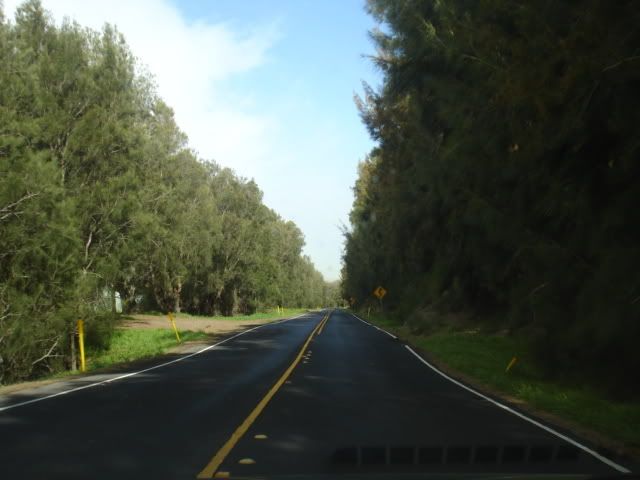
The drive to Kohala from Kamuela is pleasant, with lots of trees and forest to guide the way. It was a rainy day (which was terrible), but the journey there was beautiful and full of sunshine. It's an amazing road to drive with breathtaking scenery.


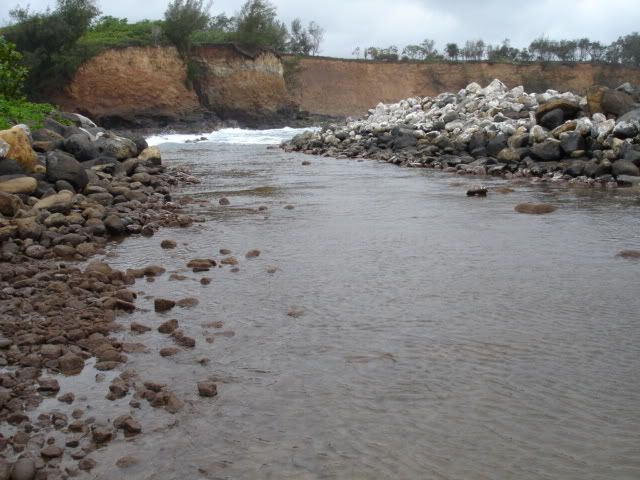
On our first stop we landed at Keokea Beach Park, which is located past Hawi (Kohala) town. This now serves as more of a recreational beach-park where locals come for picnics, swimming, and diving, while tourist come for amazing pictures.


This little area of the water reminded me a lot of the descriptions that Sam offers in the story. I can picture Charlie Moku sitting here in his canoe, waiting for Lydia to arrive. On this day in particular, the winds shook the ocean to create uneasy waves. This enabled me to visualize how Sam describes the difficulty of launching a canoe out to the rough ocean.


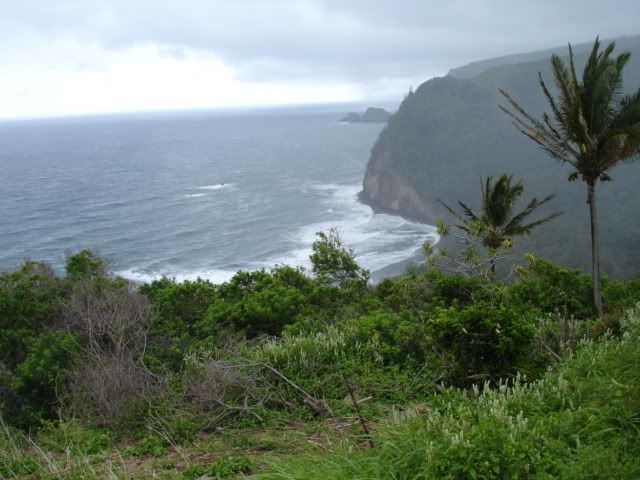
The next important stop, which is also mentioned in the story, would be Pololu Valley. It's a long and dangerous hike down, so I decided to just stay at the lookout. It was spectacular. Out in the distance, you can make out the small island offshore and see the outlining to the valleys beyond. The next mountain over dives into Waimanu Valley, and beyond that, Waipio Valley. I believe in School for Hawaiian Girls, it is said that Charlie Moku flees to Pololu.


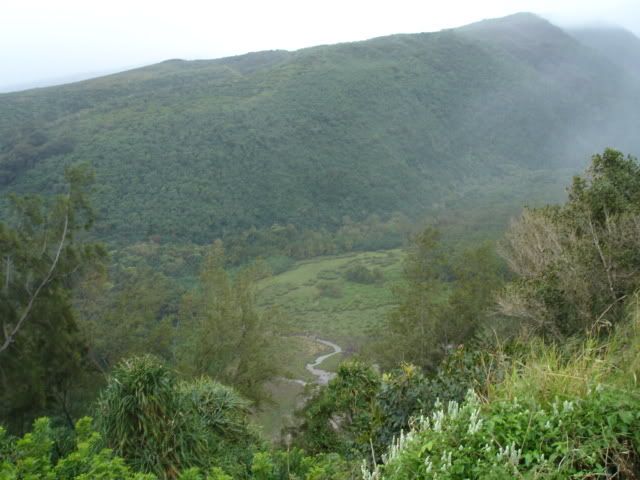
A photo of the backside, inland part of Pololu.


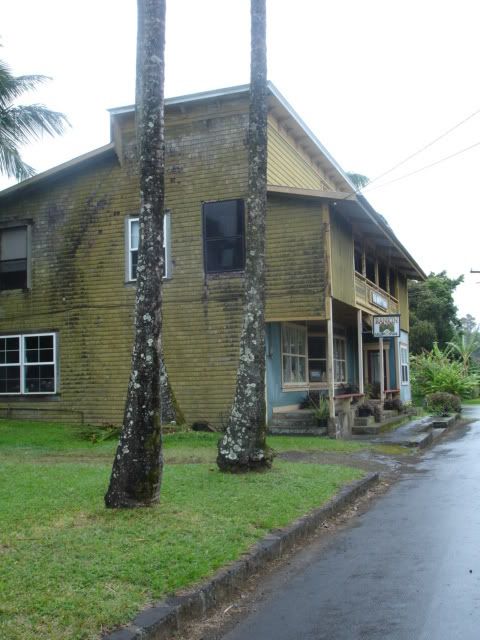
As we headed back to Kohala Town, I had to stop for a picture of this old plantation building. I read somewhere in town that most of these old structures were created back in the late 1800s-1900s. Though they are run-down and shabby looking, the buildings themselves have so much history behind them. Today, this place in particular serves as an art gallery.


The next stop was Kohala Middle School. I liked this location in particular because though it is a modern-day school, the structure is almost set back in time. I could picture the School for Hawaiian Girls being fairly similar (maybe a lot older and smaller). It was just really neat to see how even schools today hold the old plantation-style influence.


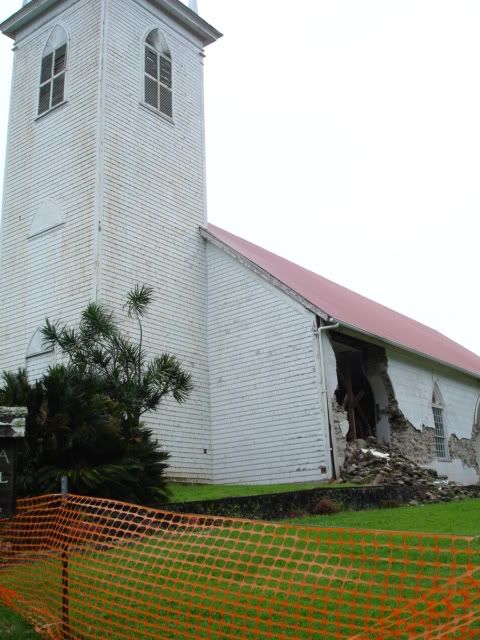
My little cousin and I managed to build enough courage to do further exploring. We trekked it up old dirt roads and came across this Baptist Church. I later found out (from talking to an elderly woman in the town) that this church was one of the first and most popular Christian churches to be built in Kohala. After the unfortunate earthquake that hit the Big Island a few months ago, the old structure was destroyed and the premises blocked off. I could perfectly place Sarah's father and husband standing at the alter of this church. It was a very eerie place.


Walking through the town of Kohala is nothing more than a few mere blocks (I do not joke!). You could make it from one end of the actual town to the other side in less than five minutes. That is the beauty behind this place. It's such a small, separate world that seems detached from the rest of the island, and furthermore, the world. Here, everyone knows one another and life goes by very slowly.


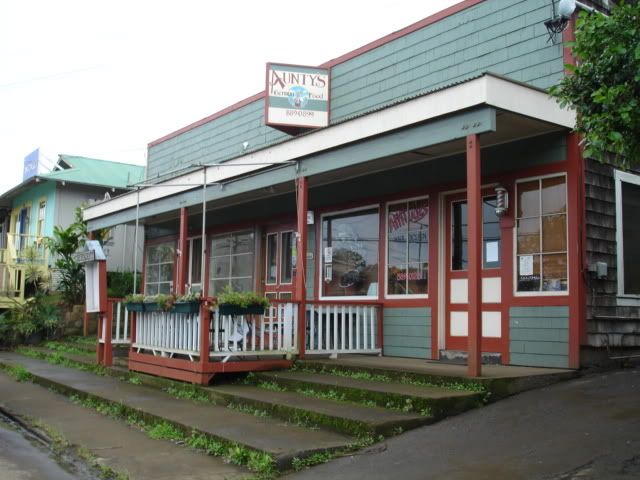
Many (but not all) of the buildings are stuck in the old world. Plantation buildings make up the town. Though they have been remodeled, many are now home to tourist shops, restaurants, and even an internet cafe.


The only public library in Kohala.


One of the only three existing statues of King Kamehameha the First sits in the heart of Kohala town. It is said that the great ruler was born in this very town. The building behind of the statue now serves as a little informational center/museum. Here, I learned that there once was a School for Girls in Kohala, though the woman working did not know where it was located. Through pictures though, I saw the school that once stood in the early 1900s.


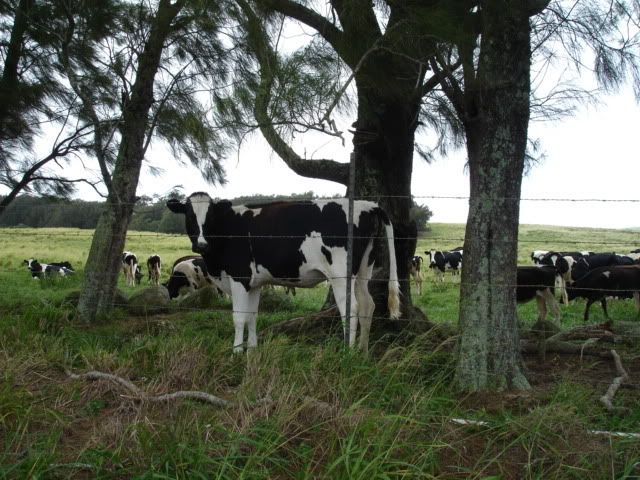
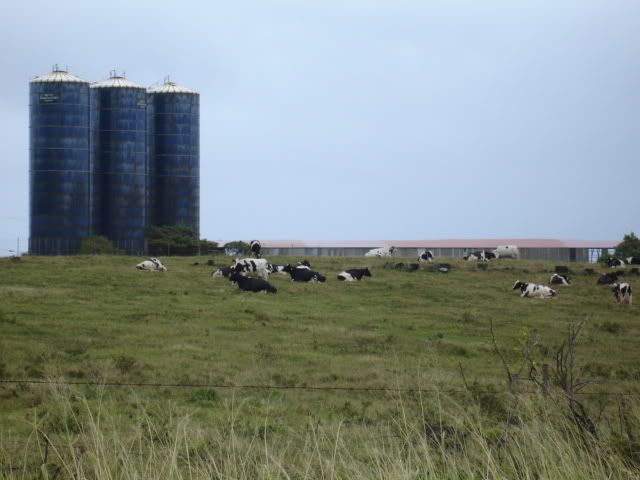
Leaving the small town, I could not miss what this place is made up of today: pastures. The land that once was filled with sugar cane fields is now the home to hundreds of grazing cattle.
And my final image depicts a mill in the middle of the sugar cane/pasture.


This place helped me visualize the sugar cane mills and factories that used to sit in the middle of the acres and acres of land. Kohala, being a place of plantation and sugar cane life, and also the place in the story of Lydia's murder.


I apologize for this lengthy blog, but hope that images of this place can help to build a more concrete visualization of Kohala. For me, visiting these places really brought School for Hawaiian Girls alive, and I wished to share this with all of you.

Love, Sex, and Power

Love, sexuality, power: what are the relationships between them?

Love is different for all people and especially differs from culture to culture. Sexuality is hard to define. Sexuality is part of who we are as human beings. Yet, in many cases sex is a taboo subject: we are not supposed to talk about it or admit we do it. In many cases sex is thought of as being only for procreation. Power is a need which not all people need or posses, yet sex is something all have the power to engage in, so comes the sex-power relationship. Sex is a very powerful tool, sexuality is how one portrays themselves toward others, lovers in particular.

Love and Sam
Sam’s love was reserved for Lydie. I believe he did not love his wives, which is why he always sent them home. Also, he always chose white women so they would not remind him of Lydie. Sam’s love for Lydie caused him to want to forget her. In forgetting her he could forget the loss of his one love. But his love would be viewed as sick, so he could never really have Lydie all for himself. His love for Lydie even caused him to, at least to believe to, kill the man who raped and killed Lydie. Sam loved power. He was a rich hotel owner who had white wives and could buy anything. He used his power to control situations. Sam’s lack of being loved and being able to love led to his need and love for power.

Power and Sam
Lydie had power when she and Sam had sex. She had to know what it was like. Sam had power in the situation, he did the act. This sexual encounter with the woman he loved left Sam empty. He knew he could never be with Lydie full time, for one she would not want it, second the relationship would never be accepted by society. Sam became to have a strong need for power to substitute his loss of love. His unyielding sex drive came about from his need for power. In his mind his ability to have sex equated with how much power he had. Sam used his power to control his life and his families lives. He thought he could buy anyone, and many times he could. But for all his money and power he could not silence Moani. Moani put a strain on Sam’s power, his power of forgetting the past. Moani’s insistence on finding out about her family caused Sam to crush her dreams of renovating the school for Hawaiian girls. He used his power to hurt her since she was relentless in her pursuit of the past which hurt him.

What can we imagine from this scene of incest is the writer’s purpose? I have done much thinking on this and one thing I come up with is shock value. A good story sells books. But there must have been more reasons behind the author’s purpose for including Sam’s sexual encounter with Lydie. Incest, we found out in class, was not looked down upon for many years. What can this tell us about the scene’s importance? It could be that the writer wanted the reader to think about the incest as a product of Hawaiian culture, but that does not seem to fit. Maybe she wanted us to decipher Sam’s character and his lack of love for Hawaiian women.

The relationship between sex and power is a strong one. For someone to give themselves to someone else there must be a release of power from one to the other. In giving oneself to another one loses power. That is they give the other person power over them by choosing to engage in sex with them. Sex can also be used to gain power over someone, by promises of intercourse one may gain power. The sex-power relationship is different for men and women, and even more different in same-sex couples. For men the power may be a result of getting sex, while for women the power lies in giving sex. In same-sex couples the roles may be different than described above. One thing is sure, there is a dynamic relationship between sex and power. Some give up power to get sex, some give up sex to get power, and then there is always the concept of rape in which no one gives up power, but instead power is taken.

The dynamic love-sex-power triangle is one which gives a reader much to think about. In School for Hawaiian Girls this triangle is full of mystery and complications. There is much mystery around why Sam loves so deeply his sister Lydie. This love leads to many complications in his life, from his inability to love, to his denial of the past.